
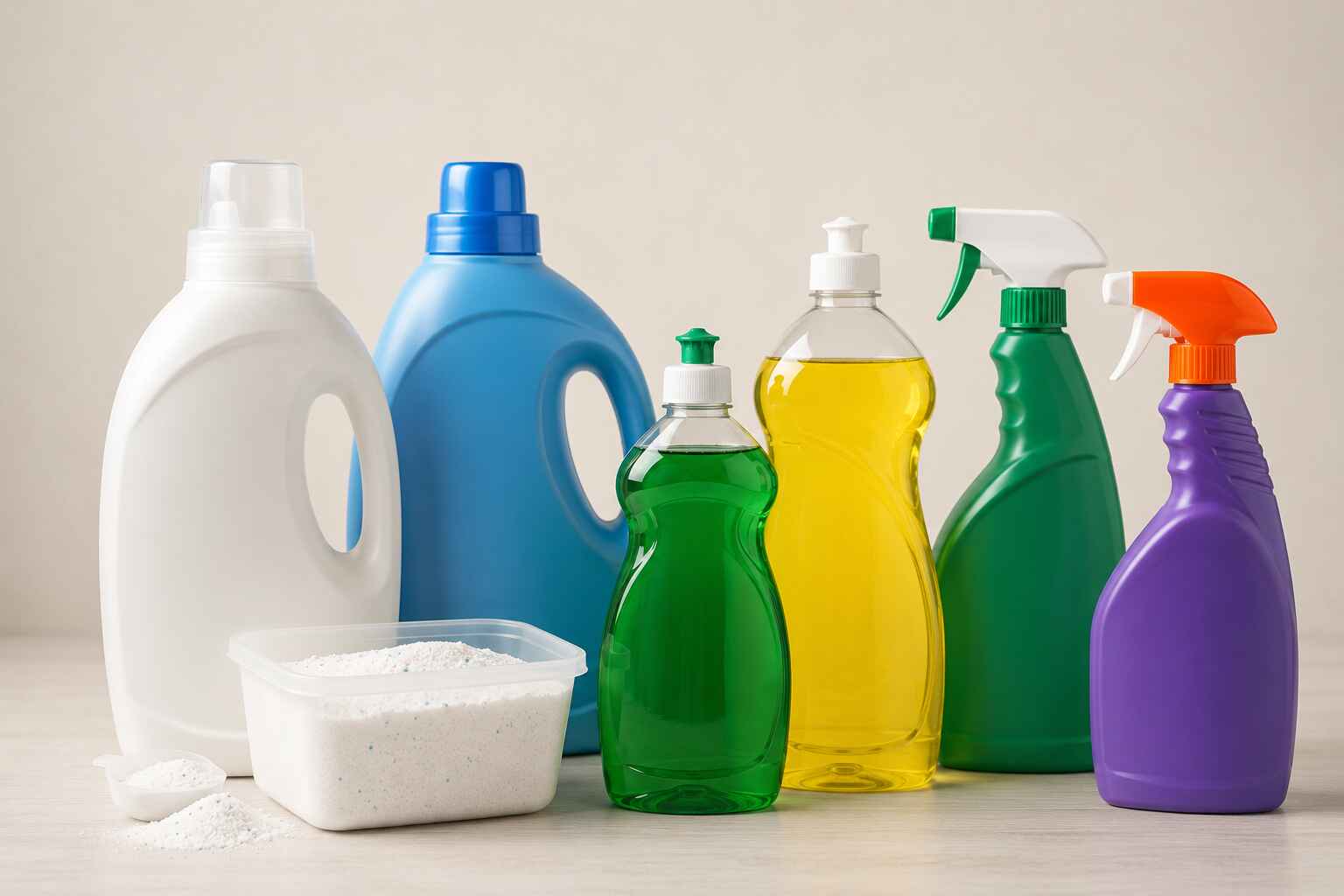
Behind the efficiency of industrial detergents and cleaners globally, there is a chemical component that guarantees the removal of the toughest greases.
We are talking about sulfonic acid , one of the most valued surfactants in modern chemistry thanks to its versatility, high performance and complete biodegradability.
This guide details its chemical structure, physicochemical properties, uses in different industries, and safety protocols. Here you will find precise technical information on the handling, transport, and storage of this important raw material.
What is sulfonic acid and what is it used for?
It is a high-performance anionic surfactant, widely used in industry as it acts as a molecular “bridge”.
Its structure has a hydrophobic part (which repels water and adheres to grease) and a hydrophilic part (which is attracted to water), giving it an exceptional ability to emulsify oils and remove grime, allowing grease to disperse in water and be easily rinsed away.
Sulfonic acid is the essential raw material from which almost all modern detergents are manufactured. Furthermore, it has the significant advantage of being biodegradable (both aerobically and anaerobically), making it a sustainable option in the face of increasingly stringent environmental regulations.
Sulfonic acid – Formula
The secret to its cleaning power lies in its structure. Its general formula is . Essentially, the molecule consists of a sulfonate functional group ( ) attached to an aromatic ring ( ), which is linked to a linear alkyl chain ( ).
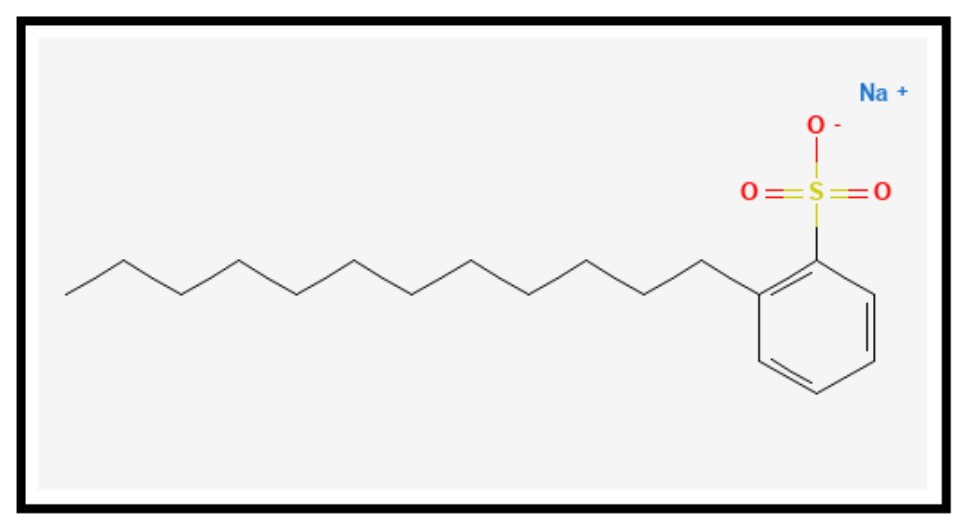
Image: LABSA Sulfonic Acid molecule. Source: PubChem (2026)
Available at: https://pubchem.ncbi.nlm.nih.gov/substance/316962185
For the reagent to function optimally at an industrial level, this chain requires a length of 10 to 13 carbon atoms . This structure gives it an average molar mass of 322.3 g/mol and ensures that it emulsifies fat like no other product.
What is another name for sulfonic acid?
From a chemical standpoint, the term “sulfonic acid” does not refer to a single molecule, but to an entire family of organic compounds. Therefore, its specific nomenclature will depend on the industrial sector and the exact type of reagent being used.
In the cleaning industry, it is known by its English acronyms: LAS ( Linear Alkylbenzene Sulfonate ) or LABSA ( Linear Alkylbenzene Sulfonic Acid ). In Spanish, it is translated as linear sulfonic acid or linear alkylbenzene sulfonic acid. It is also commonly called dodecylbenzenesulfonic acid, which is its official INCI name .
Sulfonic acid – Properties
Appearance, smell, and physical condition
At room temperature, it is a highly viscous liquid. Its color can range from light amber to dark brown, depending on the exact batch specifications and purity level. It has a very characteristic and pungent sulfurous odor that requires good ventilation in work areas.
Extreme acidity and reactive power
We are talking about a very strong acid. In its concentrated form, it has a pH below 1.0 and an acid value ranging from 175 to 185 mg KOH/g. This high acidity makes it highly corrosive to common metals and organic tissues, requiring very strict safety protocols.
Solubility and hygroscopicity
It is highly soluble in water, alcohol, ether, and various organic solvents. A vital characteristic for storage is its hygroscopicity, as it has a moderate tendency to absorb moisture from the environment; therefore, leaving a tank exposed to the open air can alter its water concentration.
Stability in hard water
This is perhaps the property that established LABSA as the leading surfactant in the detergent industry. Unlike traditional soaps (formed by the saponification of carboxylic acids), which precipitate and lose their cleaning effect when they interact with calcium and magnesium ions, this compound maintains its cleaning properties intact even in very hard water.
Reduction of surface tension
The success of this ingredient in cleaning products lies in its ability to facilitate the work of water. Its chemical structure allows it to dissolve the natural barriers between liquids and fats.
By reducing the water tension, the compound manages to surround and encapsulate the encrusted dirt, separating it from the original surface and keeping it suspended in the liquid until the final rinse.
What is sulfonic acid used for?
Most of its industrial applications are based on its ability to modify the surface tension of water and other liquids.
Cleaning products industry
Linear sulfonic acid stands out as the fundamental base component. As an essential raw material, it is used in the manufacture of laundry detergents, dishwashing liquids, industrial degreasers, automotive cleaning products, and surface cleaners.
Its high detergency and foaming capacity allows for the creation of finished products with unparalleled dirt removal. To learn more about our raw materials and chemical inputs for this sector, you can visit our specialized category for raw materials for cleaning products .
Pharmaceutical industry
In the pharmaceutical sector, where the requirements for concentration and purity are much stricter than in commercial cleaning, compounds derived from this acid constitute essential raw materials.
They are used as reagents in the synthesis of active ingredients, either by acting as acid catalysts or to improve the solubility of complex drugs.
To learn more about our portfolio of chemical products geared towards this sector, we invite you to visit our catalog of raw materials for the Pharmaceutical Industry .
How to neutralize sulfonic acid?
Since it is a strong acid, it is not used raw in the final cleaning products; it must first go through a chemical neutralization reaction.
The process involves adding an alkaline agent, such as sodium hydroxide ( caustic soda ), potassium hydroxide, or sodium carbonate, in a controlled manner to form the sulfonate salt, which is the actual active detergent.
Because it is an exothermic reaction, this step releases a large amount of heat. The success of this chemical reaction depends on thermal control: during neutralization, the temperature must never exceed 50 °C and the pH must not fall below 6.5.
If the heat is not dissipated, the product will suffer irreversible darkening and, under low pH conditions, will corrode steel equipment.
Precautions for the use of sulfonic acid
Handling industrial reagents of this strength requires strict control protocols. Therefore, a thorough understanding of the precautionary measures for sulfonic acid is essential for safe operation.
Handling
Due to its corrosive and astringent nature, direct contact causes severe burns to the skin, eyes, respiratory tract, and mucous membranes.
All personnel involved in its handling, weighing or transfer must use full personal protective equipment (PPE): splash-resistant safety glasses with face shield, chemical-resistant nitrile or neoprene gloves, boots and full-body safety suits.
Transport
Logistically, it is classified within Hazard Class 8 (Corrosive Materials). Its land or sea transport must comply with the regulations for the transport of dangerous goods, and it is identified under serial numbers UN 2584 or UN 2586 , corresponding to liquid alkylsulfonic acids.
Storage
The storage area should be cool, covered and well ventilated; the containers should be kept tightly closed to prevent the entry of air and moisture.
Furthermore, this chemical is photosensitive and reactive with certain metals. Therefore, it is prohibited to store it in uncoated iron tanks; it must be stored in high-density plastic containers, fiberglass tanks, or, failing that, stainless steel tanks of type 304 or 316.
Final comments
The success of any chemical formulation hinges on the quality of its raw materials. Understanding the behavior, reactivity, and storage requirements of this surfactant is the difference between a high-performance batch of detergent and a costly production error.
To ensure excellence in your formulations, you need raw materials that meet the highest purity and performance standards on the market. At Sumichem, we are ready to be your trusted supplier.
We invite you to explore everything we offer by browsing our Product Catalog , discovering our history in the About Us section , or resolving any business questions directly through our Contact page .